API Governance: Surfacing Evidence, Not Just Verdicts
Cutting platform debt 25% by pairing dormant-API evidence with a clear action path across an 11,000-endpoint platform.
- Role
- Product Designer
- Timeline
- 2024–Present
- Tools
- Figma, FigJam, React (recreation)
- Team
- Solo design, cross-functional engineering & data partners
The Problem
The platform had grown to roughly 11,000 API endpoints, and nobody had a reliable way to tell which ones were still in use. Dormant endpoints accumulated quietly: nothing forced teams to know about them, let alone act, so the platform kept carrying technical debt no one could see clearly enough to remove.
The Process
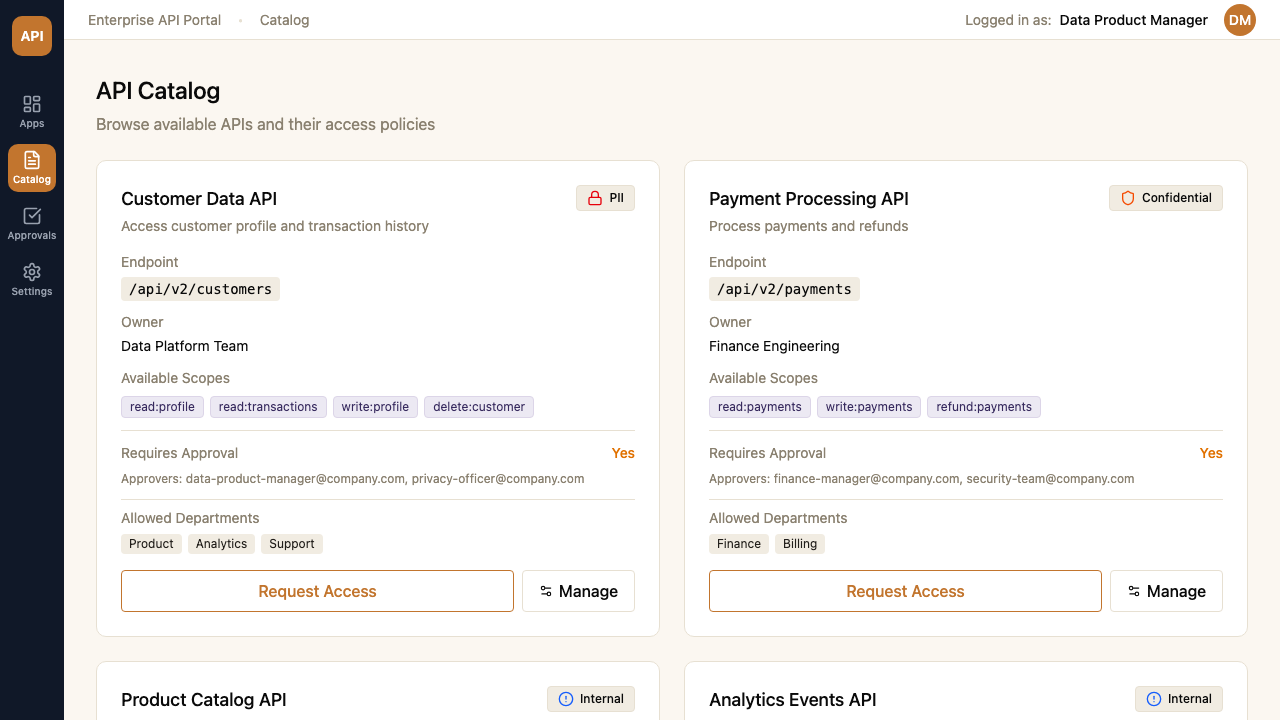 Explore the live, interactive demo
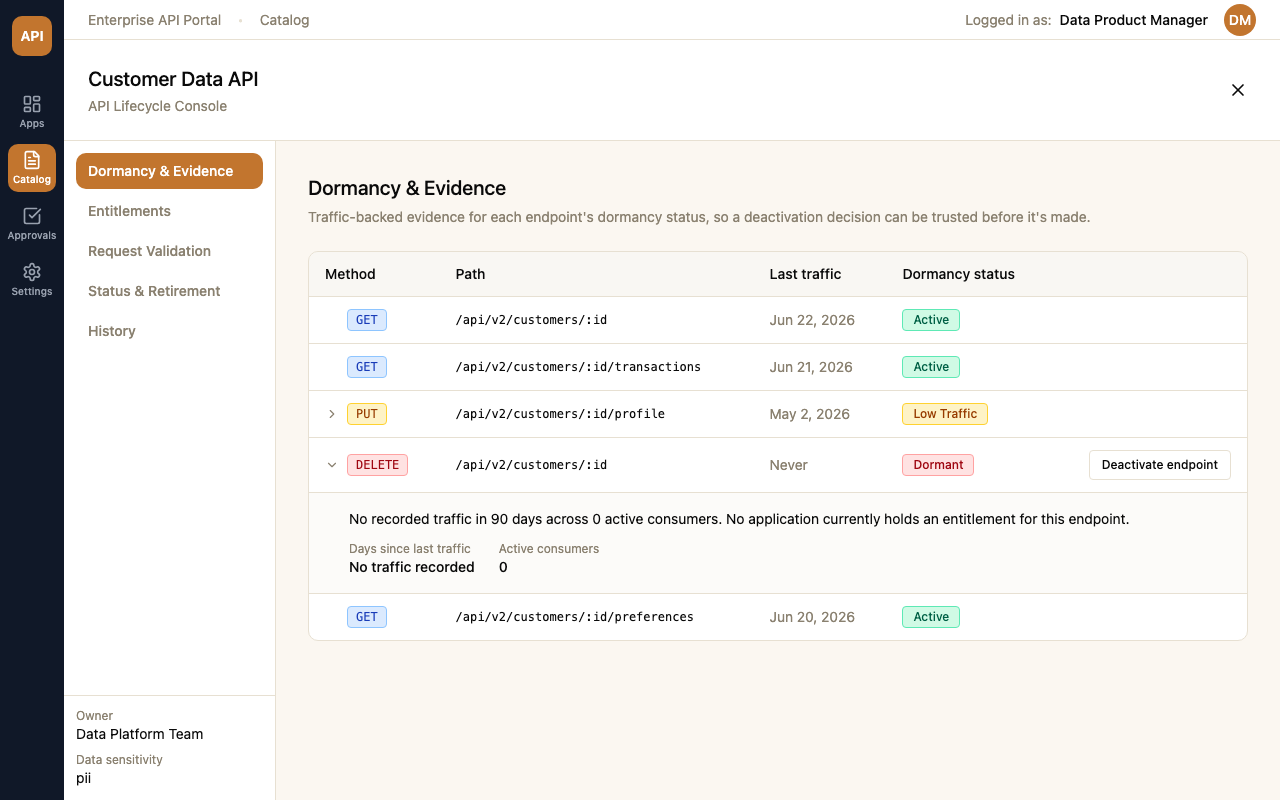
Open an API’s console and look at Dormancy & Evidence: the verdict, the usage evidence behind it, and the deactivate action live together — not three disconnected steps.
Generating a dormancy verdict for each endpoint wasn’t the hard part. Usage data already existed. The hard part was getting teams to trust the verdict enough to actually act on it.
The Decision
Two things made that trust possible. First, surfacing the underlying evidence behind each dormant flag, so a team could see why an endpoint was being called out instead of taking a verdict on faith. Second, pairing that evidence with a clear, simple action path, so finding out an endpoint was dormant and doing something about it weren’t two disconnected steps.
The Outcome
- Dormant/inactive endpoints reduced ~25% (11,000 → ~8,000)
- Manual support tickets cut 25% via self-service UI configuration
- API Coach asset cycle time reduced 10%, accelerating time-to-market
Reflection
Of the enterprise case studies here, this is the most data-heavy: the interesting design problem wasn’t the UI, it was figuring out what evidence actually builds trust, versus what just produces another dashboard nobody acts on.